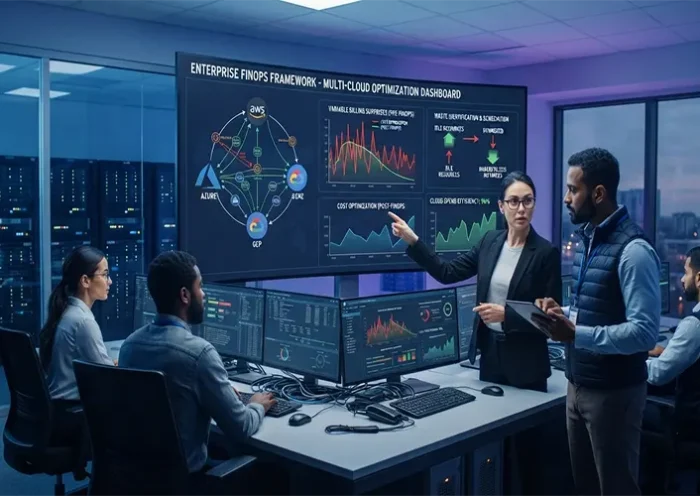
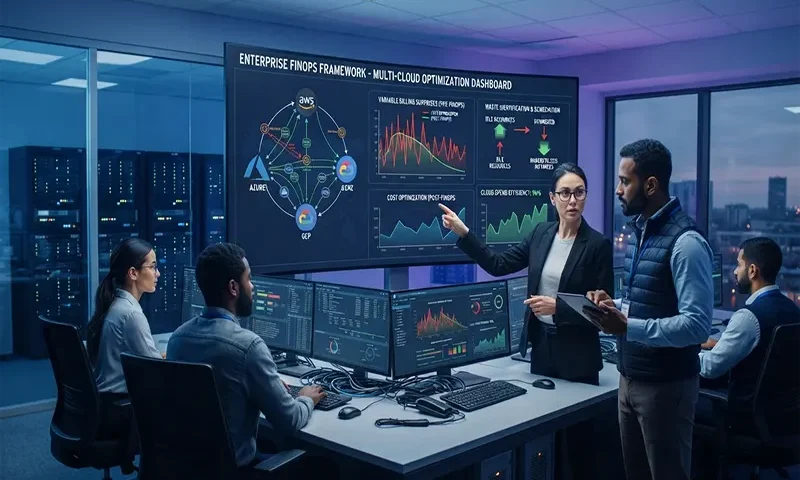
Implementing Enterprise FinOps Frameworks to Reduce Multi-Cloud Waste and Variable Billing Surprises

Implementing Enterprise FinOps Frameworks to Reduce Multi-Cloud Waste and Variable Billing Surprises

For many enterprise organizations, multi-cloud adoption was born out of a desire for agility, vendor diversification, and redundancy. However, without centralized governance, decentralized provisioning across AWS, Azure, and Google Cloud frequently leads to a silent financial drain: unbudgeted multi-cloud sprawl, widespread resource waste, and the monthly dread of variable billing surprises.

Traditional IT accounting methods are entirely unequipped to handle real-time, variable cloud consumption models. To regain control, modern enterprises are implementing structured Cloud Financial Management (FinOps) frameworks. FinOps bridges the historic communication gap between engineering speed and financial accountability, transforming cloud infrastructure from an unpredictable expense into a disciplined, optimized business engine.

The Multi-Cloud Waste Trap and Variable Billing Surprises

When development teams across multiple business units spin up cloud resources without centralized cost visibility, waste accumulates rapidly:

  • Shadow IT and Orphaned Assets: Forgotten snapshots, unattached persistent disks, idle development clusters, and over-provisioned compute instances quietly run 24/7 across
Read the rest >>>>
New Blockchain Monetization Gateways Allowing Autonomous AI Agents to Execute Financial Transactions

New Blockchain Monetization Gateways Allowing Autonomous AI Agents to Execute Financial Transactions

As artificial intelligence shifts rapidly from passive advisory tools to active autonomous operators, a profound economic bottleneck has emerged. Modern AI agents can write code, analyze data, negotiate contracts, and manage complex workflows in milliseconds, yet they remain fundamentally locked out of traditional financial systems. Traditional banking rails, credit card networks, and legacy merchant gateways are built entirely around human identity, manual authorization, and heavy KYC compliance.

To unlock true machine-to-machine commerce, the tech ecosystem is turning to blockchain monetization gateways. By combining high-speed layer-2 networks, account abstraction, and smart contracts, these crypto-native rails provide the programmatic infrastructure required for autonomous AI agents to hold funds, execute transactions, and monetize services at machine speed.

The Web2 Payment Bottleneck for Autonomous Agents

Legacy payment rails were never designed for software entities operating at automated scale.

  • The Human Identification Barrier: Traditional merchant accounts and payment gateways require physical human owners, corporate
Read the rest >>>>

Top 3 Dental SEO Levers, Consultant Explains

A parent looking for a new family dentist in Leeds, a commuter needing urgent treatment in Croydon, or a patient comparing Invisalign providers in Bristol is rarely reading the entire internet. They are scanning the local results, judging trust signals, and choosing the practice that appears competent, nearby and easy to contact.

SEO expert Paul Hoda says the strongest gains usually come from improving the basics before chasing technical tricks. In his view, practices that treat dental seo as a long-term visibility system rather than a one-off project are better placed to attract steady enquiries from search. His advice is straightforward: make the clinic easy for Google to understand, easy for patients to trust, and easy for visitors to contact. 

That idea leads to three levers that matter more than most others. The first is local intent: showing up when someone nearby is ready to book. The second is service … Read the rest >>>>

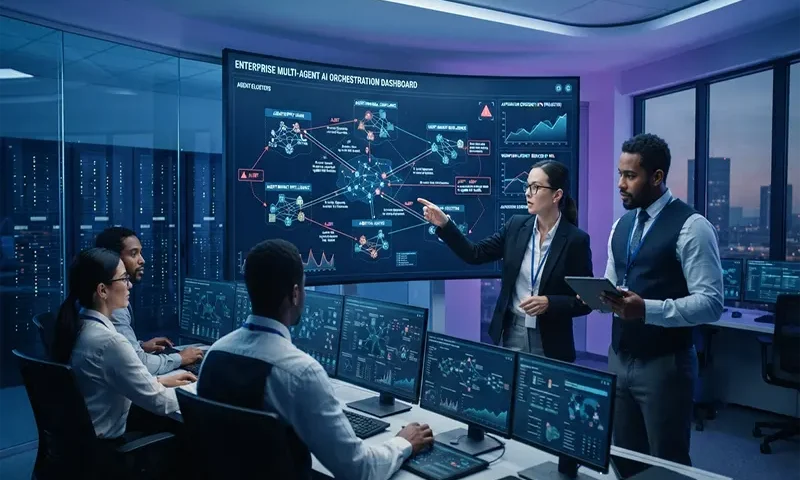
How Enterprise Organizations Are Orchestrating Multi-Agent AI Systems to Automate Complex Business Workflows

How Enterprise Organizations Are Orchestrating Multi-Agent AI Systems to Automate Complex Business Workflows

The early waves of enterprise generative AI adoption were defined by isolated chat interfaces and single-prompt interactions. While these tools boosted individual productivity, they hit a hard operational ceiling when applied to complex, multi-step business processes that require cross-departmental coordination, continuous validation, and tool execution.

To break through this limitation, enterprise organizations are shifting away from monolithic LLMs and adopting multi-agent AI systems. By orchestrating specialized, collaborative networks of autonomous agents, businesses are transforming automated workflows from rigid scripts into dynamic digital workforces.

The Limitations of Single-Agent and Monolithic AI Models

Throwing a single, monolithic large language model at an end-to-end enterprise workflow—such as supply chain disruption re-routing or complex financial auditing—inevitably leads to failure for several reasons:

  • Cognitive Overload and Hallucination Drift: When forced to handle planning, data extraction, analysis, calculation, and formatting simultaneously within a single prompt context, models suffer from attention degradation and mounting error rates.
Read the rest >>>>
Starting a Carbon Neutral Green Web Hosting Business with Renewable Energy Certificates

Starting a Carbon Neutral Green Web Hosting Business with Renewable Energy Certificates

The internet has a massive, often invisible carbon footprint. Global data centers, cooling systems, and network infrastructure consume more electricity than entire nations, contributing significantly to global greenhouse gas emissions. As corporations, nonprofits, and digital consumers increasingly prioritize sustainability, the demand for eco-friendly digital infrastructure is surging.

For entrepreneurs and forward-thinking IT professionals, launching a green web hosting business is no longer just an ethical statement—it is a high-growth, differentiated business opportunity. By leveraging Renewable Energy Certificates (RECs) and energy-efficient architecture, you can build a profitable, carbon-neutral hosting company without needing to build physical data centers from scratch.

The Environmental Imperative and Market Opportunity

Traditional web hosting infrastructure runs 24/7, drawing massive amounts of electricity from local power grids that are often heavily reliant on fossil fuels.

  • The Scope 3 Challenge: Enterprises and digital brands are under intense regulatory and consumer pressure to reduce their Scope 3 emissions (indirect supply
Read the rest >>>>